
Séjours & Hôtels à Volubilis
Découvrez les meilleures offres d’hôtels et séjours tout compris à Volubilis, sélectionnées par nos experts pour des vacances inoubliables.
Volubilis
Volubilis: Morocco's Window into the Roman World
Rising dramatically from the fertile plains of northern Morocco, the ancient city of Volubilis stands as North Africa's most impressive and well-preserved archaeological site from the Roman era. These magnificent ruins, with their monumental structures and remarkably intact mosaics, offer visitors a tangible connection to an often-overlooked chapter in Morocco's diverse history—a time when this remote city represented one of the furthest extensions of Roman influence in Africa. Designated as a UNESCO World Heritage Site in 1997, Volubilis provides not only spectacular views across the surrounding countryside but also valuable insights into the complex cultural exchanges that have shaped Moroccan identity over the centuries.
Founded in the 3rd century BCE as a Carthaginian settlement, Volubilis reached its greatest prosperity during the Roman period from the 1st to the 3rd centuries CE. Under Roman administration, it evolved from a frontier town into a prosperous regional center with a population estimated at up to 20,000 inhabitants. The city's wealth derived primarily from agricultural production and exports, particularly olive oil, as demonstrated by the numerous olive presses discovered throughout the site. This economic prosperity financed the construction of impressive public buildings, elegant private villas, and sophisticated urban infrastructure that brought Roman architectural and engineering traditions into the North African landscape.
The site's centerpiece is the magnificent Triumphal Arch, constructed in 217 CE in honor of Emperor Caracalla. Standing approximately 13 meters high and originally crowned by a bronze chariot, this monumental gateway once marked the terminus of the city's main thoroughfare, the Decumanus Maximus. Remarkably preserved despite centuries of earthquakes and exposure to the elements, the arch features detailed reliefs depicting nymphs, garlands, and other classical motifs, demonstrating the high level of craftsmanship that flourished even in this distant province of the Roman Empire.
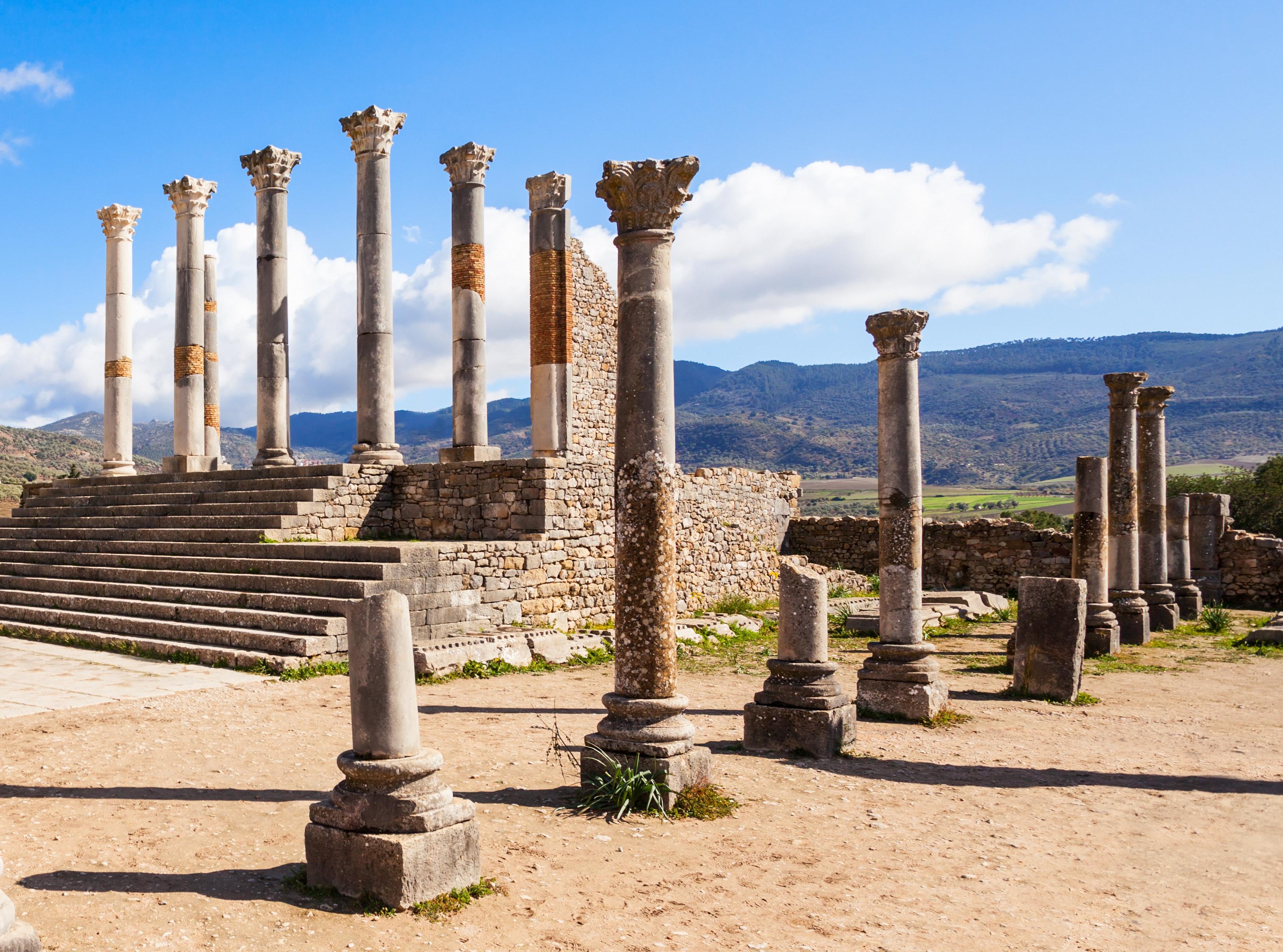
Continuing along the Decumanus Maximus, visitors encounter the remains of the forum, the political, religious, and commercial heart of a Roman city. This vast rectangular plaza was surrounded by colonnaded porticoes and dominated by the basilica, which served as a center for legal and administrative activities. The foundations of several temples, including one dedicated to Jupiter, reveal the importance of Roman religious practices in this frontier community. Nearby stands the Capitol, where excavations have uncovered altars associated with the imperial cult, highlighting Volubilis's political and cultural connections with Rome despite its geographical distance.
Perhaps the most remarkable treasures of Volubilis are its extraordinarily well-preserved mosaics, which rank among the finest examples in North Africa. These intricate works of art, created using thousands of tiny colored stone and glass tesserae, decorated the floors of wealthy private residences concentrated in the northeastern section of the city. Many remain in their original locations, allowing visitors to appreciate their artistry within their historical context. Their subjects range from mythological scenes, including Orpheus charming animals with his lyre, the Twelve Labors of Hercules, and Diana bathing, to everyday themes such as hunting, agriculture, and marine life. The famous House of Venus contains a particularly remarkable bathing scene, while the House of the Athlete features mosaics depicting sporting competitions that formed an important part of Roman cultural life.
The domestic architecture of Volubilis offers fascinating glimpses into everyday life during the Roman period. The homes of wealthy citizens generally followed the classic Mediterranean layout, with rooms arranged around a central courtyard featuring a decorative pool. Many residences incorporated private bathrooms, sophisticated drainage systems, and underfloor heating—luxuries that reflected both the prosperity of their owners and the transfer of Roman technological knowledge to this distant province. The presence of such advanced amenities in a remote location demonstrates the extensive reach of Roman civilization and its ability to reproduce elements of metropolitan life even at the far edges of the empire.
agency.noHotelsFound
agency.noContractedHotels